The Final Scene

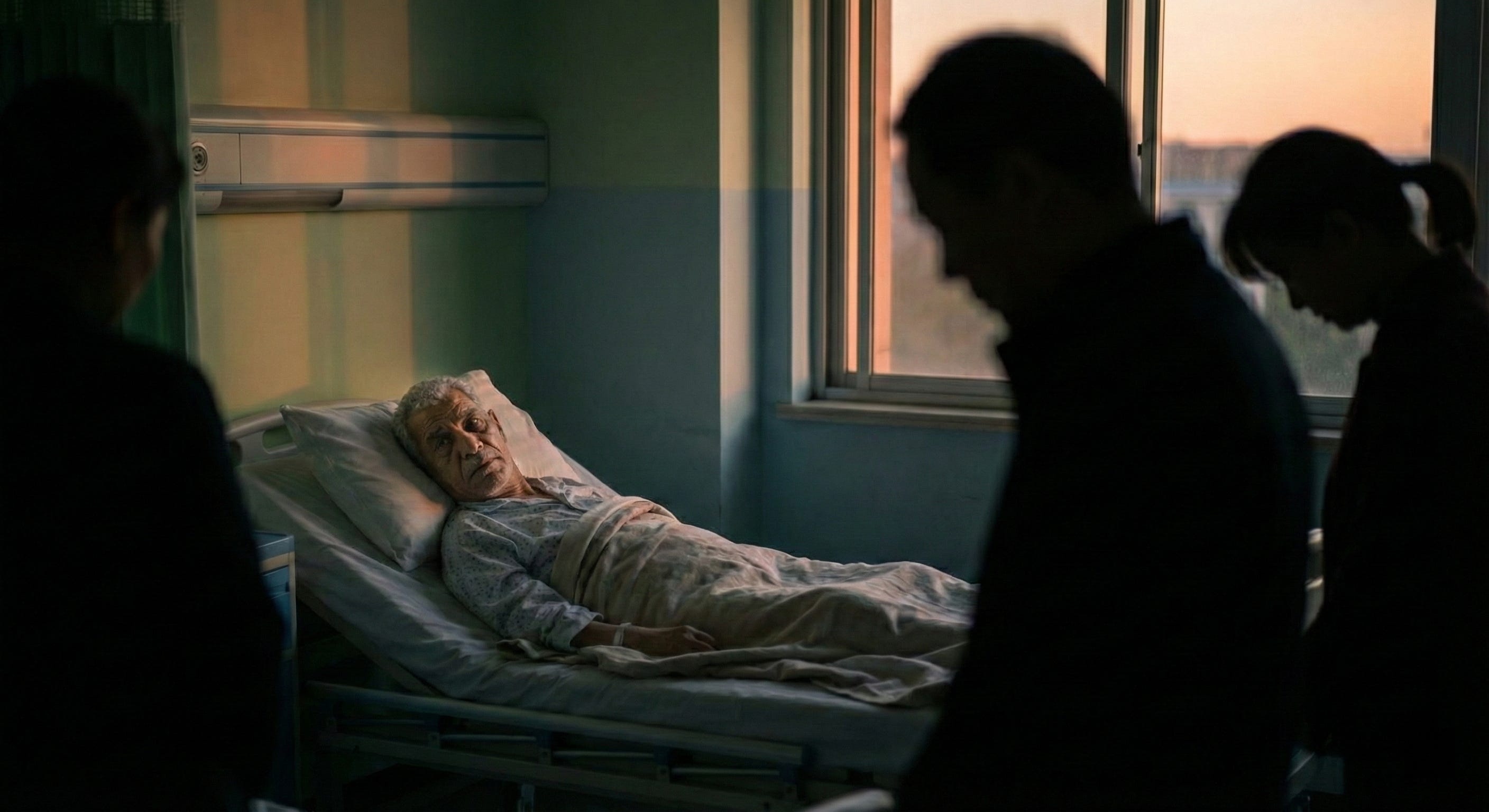
From time to time, I imagine the final scene of life. A person lying on a sickbed, surrounded by loving and worried faces, clinging to hope while being powerless to offer anything beyond what doctors can do. In that moment, where weakness meets fear, one question hangs in the air: what is this person thinking about? What goes through their mind when they are so close to departure?
The first time this idea crossed my mind was because of the book The Top Five Regrets of the Dying by the Australian author Bronnie Ware. The book did not emerge in its well-known form right away. It began as a simple article on a personal blog in 2009 titled Regrets of the Dying. Later, as readers engaged with it and its impact grew, that article turned into a book documenting Bronnie Ware’s experience as a palliative care nurse. Through her work, she accompanied many patients in their final weeks, listening to their confessions and regrets in rare moments of absolute honesty, when masks fall away and nothing remains worth hiding.
But beyond the book, the final scene stands on its own. A person at their weakest, aware that time is narrowing and that what remains is less than what has passed. In moments like these, thinking is not orderly or philosophical. It is fragmented and confused, wavering between fear, attachment, and memory.
Of course, a person is deeply occupied with their condition and pain, yet moments come when they revisit their life as it truly was, with all its large and small details. What they did and what they did not do, decisions that might have turned out differently, and days that have passed with no possibility of return. Perhaps they feel they wanted more from life, not necessarily more years, but a fuller, more honest life.
In those moments, pride and regret sit side by side without order. There is no single clear regret, no definitive answer, but rather a general sense that many things could have been lived differently, and that other things were fine just as they were.
In Egypt, we have a phrase which, if translated literally, would be “I want to die while I am comfortable,” and it actually carries a much deeper meaning: the wish to die with inner peace, free from regret, and at ease with the life one has lived.
In the end, the scene of departure is almost the same in its outward form, but its true weight does not come from the moment itself. It comes from what preceded it, from the life a person lived, with all its choices.